Why Intermittent Probe Dropout During Angle Changes Usually Starts in the Flex Path
Intermittent probe dropout during angle changes usually starts in the flex path. Here is how to read the pattern before full failure.
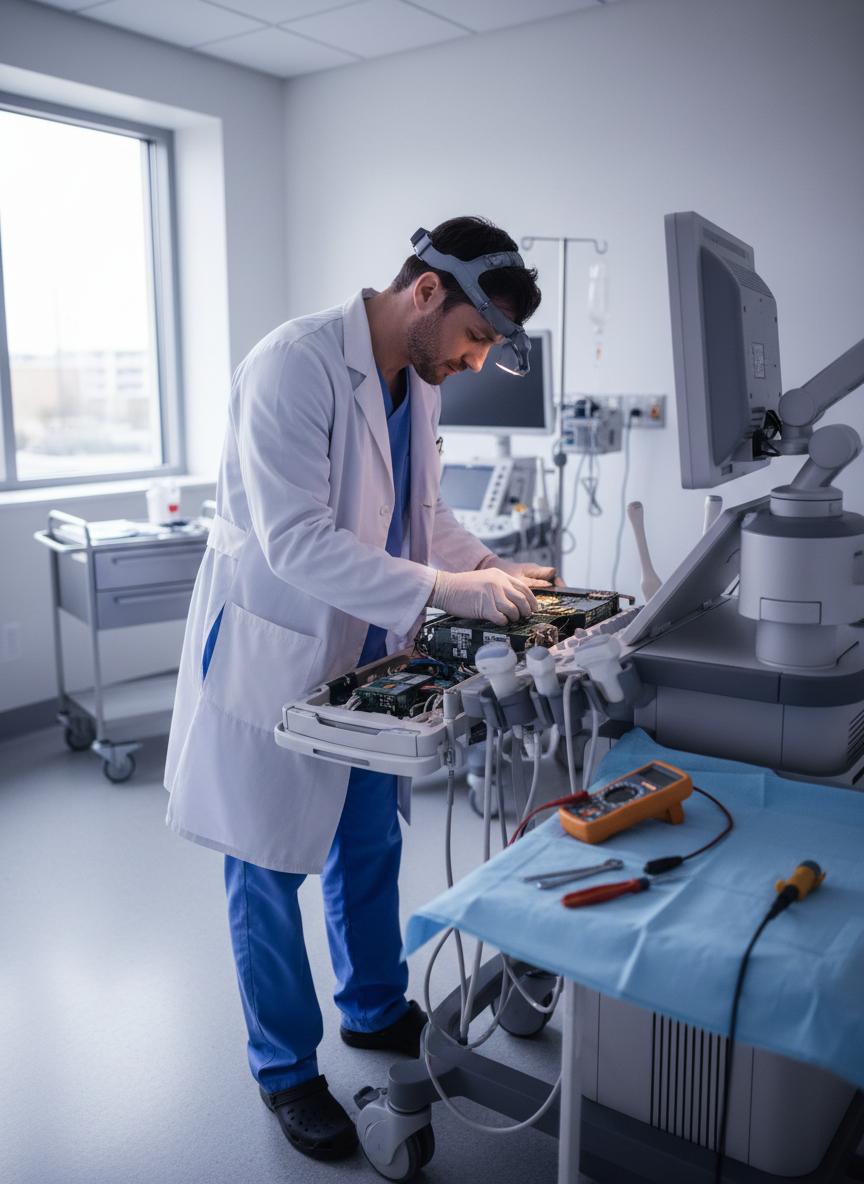
When probe dropout appears only during angle changes, the scanner itself is often blamed first. In many real cases, the weakness begins in the probe flex path, where repeated movement gradually degrades the signal route before total failure becomes obvious.
That is why angle-dependent dropout is so expensive to ignore. The probe may pass quick stationary checks, yet fail under normal handling once the cable path is asked to flex the way it does during actual scanning.
Recommended replacement option: PROBE CABLE HOOK by Mindray North America
Why angle changes reveal the real weakness
A probe does not experience the same strain at every position. Angle shifts place different stress on the flex path, transition zone, and internal routing, so early damage often appears only during motion or repositioning.
What this pattern usually looks like
A common sequence is stable imaging at one angle, then sudden dropout, noise, or brief image collapse when the probe is repositioned. Once the angle settles again, the symptom may disappear, making the problem look random when it is actually movement-linked.
What to inspect first
Check whether the symptom follows repeatable probe repositioning, especially near the handle, cable tail, or flex transition area. If the image changes with controlled movement, the flex path deserves early suspicion.
Why earlier replacement saves time
Movement-triggered dropout makes every scan less trustworthy. Replacing a weak probe-side path earlier is usually cheaper than waiting for a complete failure during active use.